How Our EV Pre-Purchase Inspections Work
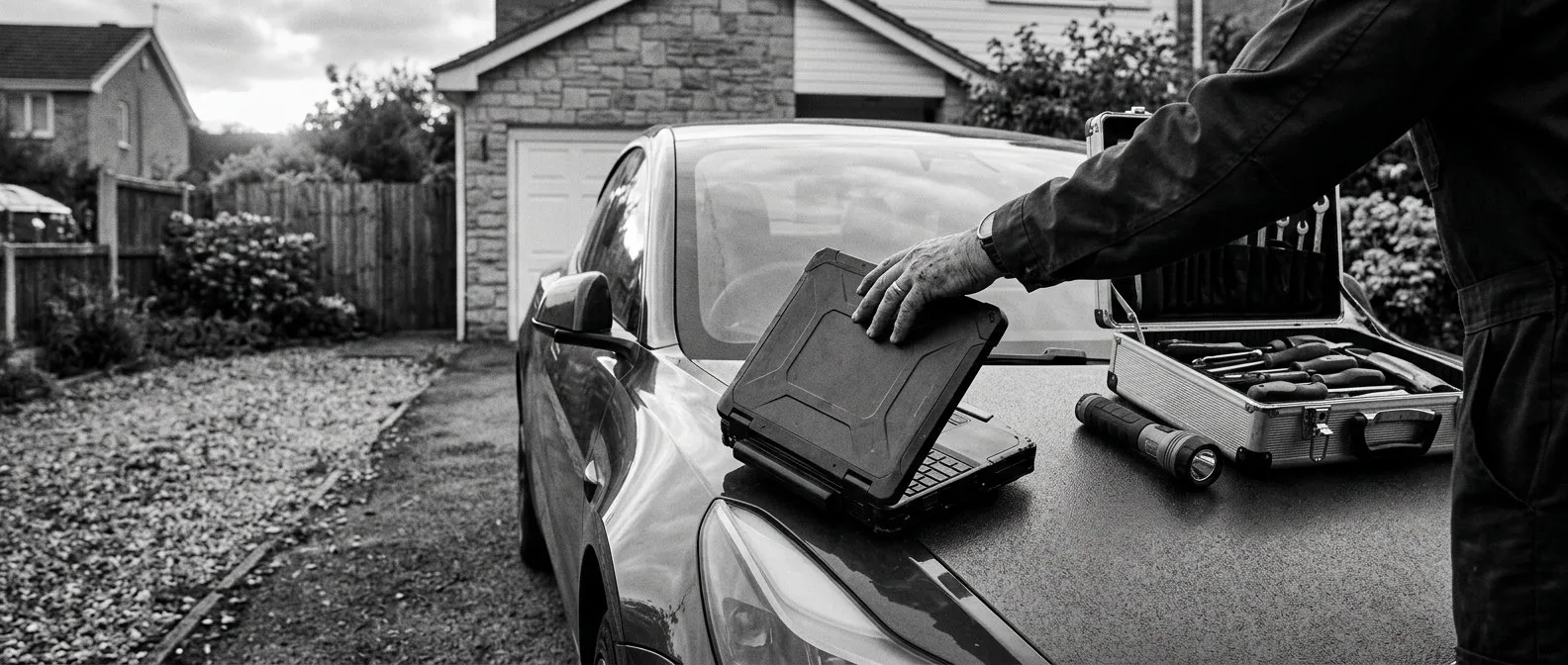
Technician closing a laptop on the bonnet of an electric car after an inspection

Four steps. No surprises.

From the moment you send us a listing to the moment you decide, here's exactly what happens — who does what, how long it takes, and what you end up holding. We arrange the inspection; a vetted mechanic who specialises in electric vehicles carries it out.

Written and reviewed by the EV Inspection team · Updated 2 August 2026

01

Book

Takes 3 minutes

Send us the listing link (or just the make, model, year and odometer), the suburb the car is sitting in, and the seller's contact. Choose Essential or Complete — or let us recommend one.

We confirm availability and a time window, usually within two hours during business hours. We contact the seller or dealer ourselves and arrange access, including asking them to have the car at a sensible state of charge for testing.

Nothing is charged until the inspection is confirmed. You don't need to be there.

02

Inspect

90 min – 3 hours on site

A technician attends the vehicle wherever it is — private driveway, dealer yard, workplace car park. Everything is done on site with EV-specific diagnostic equipment.

The battery is interrogated directly, the high-voltage system is isolation tested, charging is run live where a charger is available, and the car goes out on a road test in real traffic. The conventional inspection — body, tyres, brakes, suspension, interior — happens in the same visit.

Every defect is photographed as we go. If something serious turns up early, we call you from the driveway rather than letting you wait.

03

Report

Inside 24 hours

A written PDF lands in your inbox — not a tick-box sheet. Plain English, photographs of every defect, and numbers where numbers matter.

Battery summary

State of health, usable capacity, cell balance and realistic range today.

Defect list

Every fault photographed, ranked urgent / soon / monitor, with repair estimates.

Charging & software

Charge test results, fault codes, firmware version and open recalls.

Our verdict

One paragraph: would we buy this car at this price, and what we'd fix first.

04

Decide

Your call, our phone line

We ring you to walk through the report — what's normal for the model, what's a bargaining chip, and what would make us walk away. If you want to negotiate, the costed defect list is designed to be forwarded straight to the seller.

Plenty of our customers walk away. That's a good outcome too — it's a lot cheaper than the alternative.

What we need from you

Three things, that's it.

The listing link, or make, model, year and odometer.
Where the car is and who's holding the keys.
A phone number we can reach you on during the inspection.

Good to know

Before we arrive.

Charge testing needs a charger on site — we'll ask the seller, or bring a portable unit where power is available.
A pack sitting at 100% or 5% limits some tests. Around half charge is ideal.
Wet weather doesn't stop us, but paint and panel assessment is better dry — we'll flag it in the report either way.
Start a booking

Don't buy a used EV blind.

Book an independent inspection in Brisbane, Sydney or Melbourne — Monday to Friday.