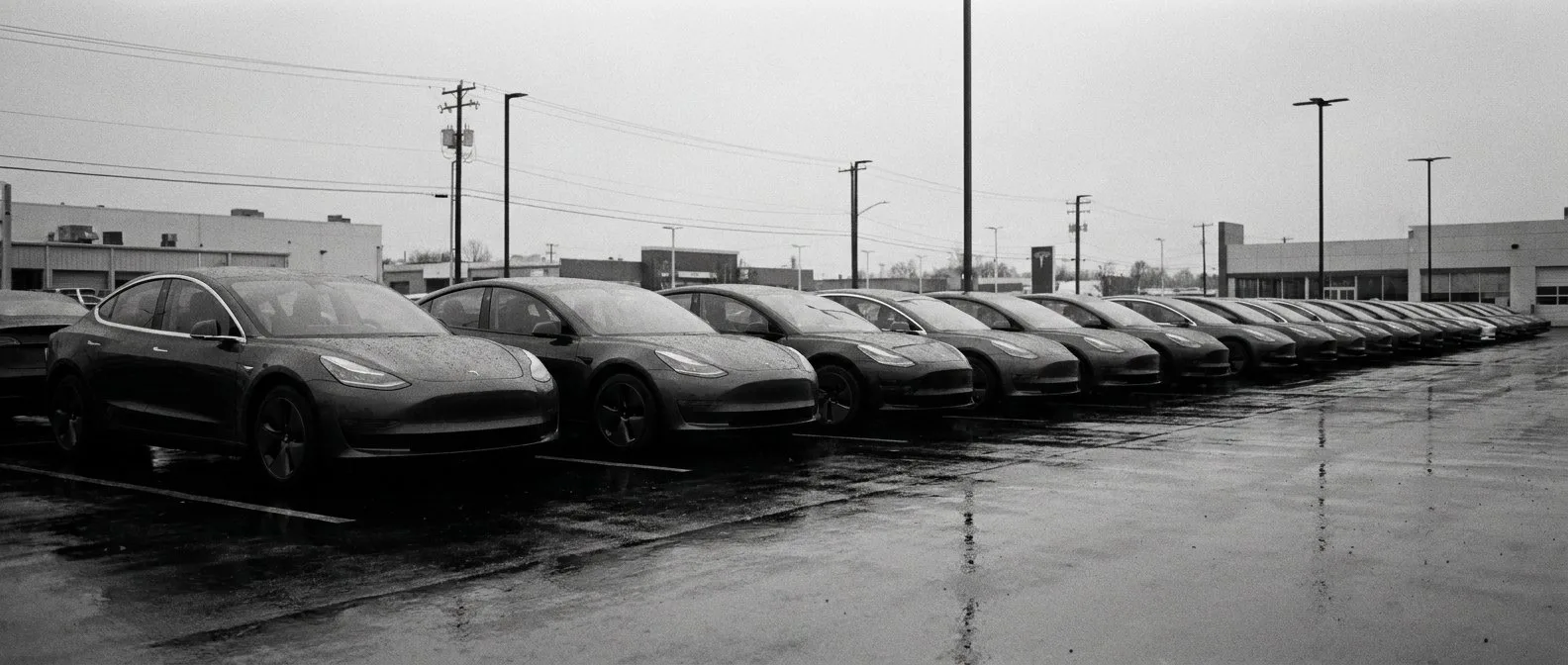
Why they are everywhere
Three-year lease terms from the 2022–23 EV surge are maturing now
The upside
Serviced on schedule, often under 5 years old, priced below private sales
The catch
Hard use and warranty transfer — neither appears in the logbook
A lease car being well serviced and a lease car being well treated are two different claims. The logbook only ever proves the first one.
Why the market is full of them
Novated leasing on electric cars became dramatically more attractive in Australia from mid-2022, and the standard lease runs three to five years. Those terms are maturing now, which is why near-identical, low-owner, well-presented EVs keep appearing four at a time in the same suburb.
For a buyer that is genuinely good news. Supply suppresses price, and a car that has to be handed back at a set date tends to get its scheduled servicing done. It also means you are rarely negotiating against scarcity — if this one has a problem, there is another next week.
What an ex-lease car usually gets right
Servicing is the big one. Lease agreements normally require it, so the history is real rather than reconstructed. Tyres and brakes are often replaced late in the term to meet return conditions, and body damage is frequently repaired for the same reason.
- Complete, on-schedule service history
- Recent tyres and brakes, replaced to meet return standards
- Software and recall work usually completed under the lease
- Single operator rather than a string of short-term owners
What the logbook does not tell you
A lease car is somebody else’s cost centre. Charging was expensed, so fast charging was chosen for convenience rather than battery longevity; kilometres were driven because they were paid for. None of that appears in a service record, and all of it shows in the battery data.
The three things we look at are the ratio of DC to AC charging sessions against the car’s age, the state of charge the car habitually sat at, and cell voltage spread across the pack. Together they describe how the car was actually used rather than how often it was booked in.
Interior wear is the other tell. Driver’s seat bolsters, steering wheel finish and screen burn on high-use displays age with hours rather than kilometres, and a car whose interior looks older than its odometer has usually done a lot of short trips with the systems running.
Does the battery warranty transfer?
Usually, but not always, and the detail matters more on an EV than on anything else. Most manufacturers cover the high-voltage battery for eight years or a set distance, whichever comes first, and most allow the balance to pass to a subsequent owner. Some require the service history to be complete and dealer-stamped, and a few treat commercial or ride-share use as a disqualifying condition.
That last clause is the one that catches people. A car leased to a business and used for deliveries can be outside the terms even though the seller has never heard of the exclusion. We check the build date, in-service date and kilometres against the manufacturer’s published terms and state the remaining position in writing — see the warranty check guide for how that works in detail.
How to buy one well
Treat the batch as leverage. When four similar cars land at once, a costed defect list turns a fixed asking price into a conversation. Ask what the car did for a living, then let the data confirm or contradict it — most sellers of ex-lease stock genuinely do not know, because they bought it at auction themselves.
- Establish the measured battery state of health before you discuss price
- Confirm the warranty position in writing, not from the advertisement
- Check open recalls and software status, which lease returns often skip late in the term
- Compare against the other cars in the batch rather than against the ask
Are ex-lease EVs a good buy?
Frequently, yes. They are usually serviced on schedule and priced below equivalent private sales. The two things to establish are how hard the car actually worked — which the logbook does not show — and whether the balance of the battery warranty transfers to you.
Does the battery warranty transfer to a second owner?
Usually, but the terms differ by manufacturer. Most high-voltage battery warranties run eight years or a set distance and pass to a subsequent owner, though some require complete dealer-stamped servicing and some exclude vehicles used commercially. We check the build date, in-service date and kilometres against the manufacturer’s terms and state the position in writing.
How can you tell how hard a lease car was driven?
The ratio of DC fast-charge sessions to AC sessions against the car’s age, the state of charge it habitually sat at, cell voltage spread across the pack, and interior wear that ages with hours rather than kilometres. No single item proves anything; the combination usually does.
Is an ex-fleet EV different to an ex-novated-lease EV?
Yes. A novated lease car typically had one regular driver, while a pooled fleet car may have had dozens with no one accountable for it. Fleet cars are not automatically worse — they are often serviced more rigorously — but wear tends to be less consistent and interior condition is a poorer guide to use.
Should I avoid ex-rideshare EVs?
Not automatically, but they need to be priced as what they are. Very high kilometres in stop-start conditions with heavy fast charging is the hardest life a used EV gets, and the measured battery figure is the only honest basis for the price.