How it is found
Paint depth gauge across every panel and the roof, every inspection
Why it matters
Resale value, insurance history, and water sealing
The EV difference
Water reaching high-voltage components is not a cosmetic issue
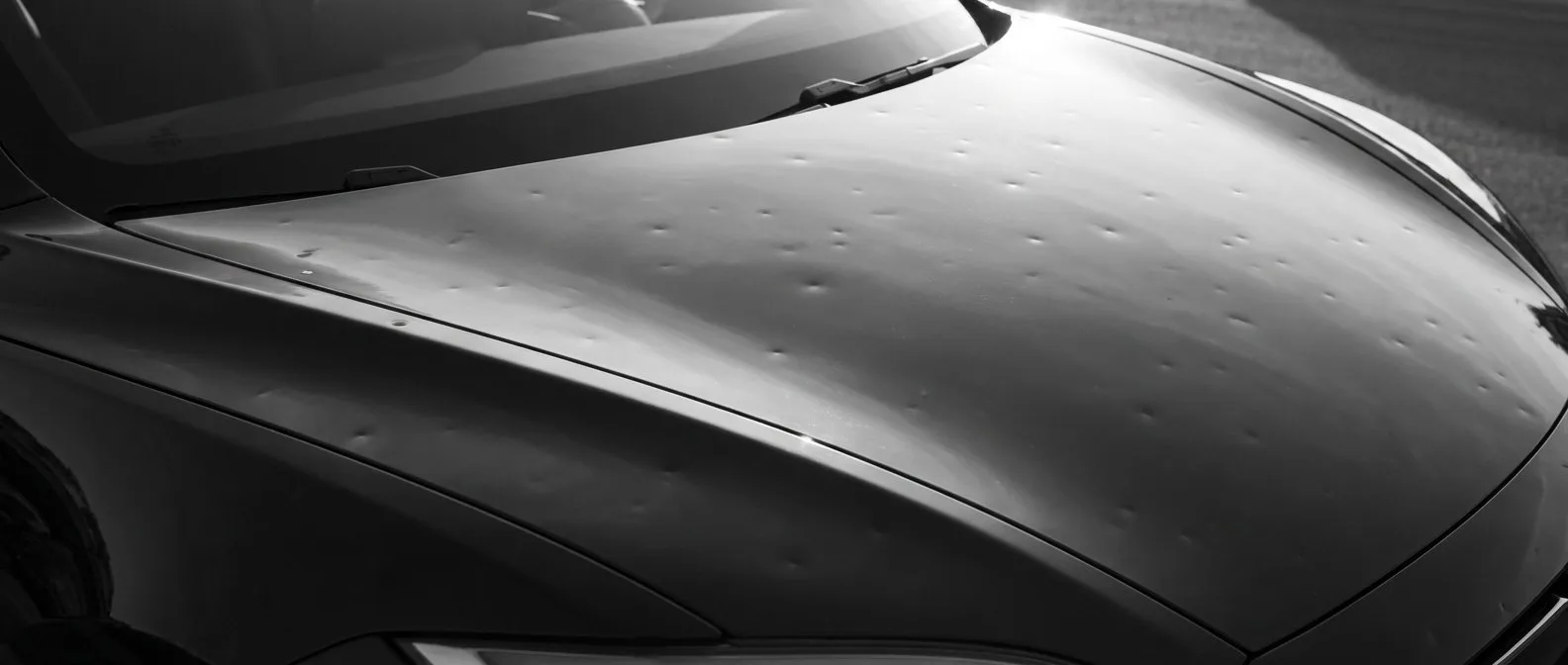
Fresh paint hides hail from the eye almost perfectly. It does not hide it from a gauge that reads coating thickness in microns.
Why Australia has a hail problem
Major hailstorms through Sydney, Melbourne, Brisbane and the ACT over the last decade have damaged hundreds of thousands of vehicles. Many were repaired and returned to the road legitimately; a proportion were written off, repaired and re-registered; and a large number were repaired privately without ever touching an insurance claim.
That last group is the one that matters to a buyer, because there is no claim record to find. The only evidence is on the car.
How repaired damage is detected
A paint depth gauge measures coating thickness in microns. Factory paint on a given model sits in a fairly tight range across every panel; filler, respray or panel replacement reads noticeably differently. Running the gauge systematically across every panel and the roof produces a map, and it is the inconsistency between panels rather than any single reading that tells the story.
Paintless dent repair — the usual fix for light hail — leaves the paint intact but often leaves subtle surface distortion visible under raking light, and sometimes tool marks on the inner panel. Roof and bonnet are where hail lands, so those are checked hardest.
- Paint depth mapped across every panel, roof and pillars
- Panel gaps, fastener marks and overspray on seals and trim
- Glass date codes, which reveal replaced windscreens and rear glass
- Underbody and boot floor for repair evidence and water staining
- Seals and drain paths, particularly on the roof and tailgate
Why it matters more on an electric car
On a combustion car a mediocre roof repair is a rust risk. On an EV it is a water risk, and water is the one thing high-voltage systems genuinely cannot tolerate. Poorly resealed roof panels, tailgates and boot floors let moisture find its way to places that were designed to stay dry.
Boot floor water ingress is a known issue on some models even without repair history, and it sits directly above high-voltage components on several platforms. That is why isolation resistance testing is part of every inspection — a reading that has drifted from specification is an early warning that water is getting somewhere it should not.
What to do with what you find
Disclosed, properly repaired hail is a legitimate reason to pay less, not a disqualification. The market discounts repaired-hail cars, and if the repair was done well and the seller is upfront, that discount is your gain.
Undisclosed repairs are a different signal. It is not only about the metal — it tells you what else the seller has not mentioned, and it is a reasonable point to reopen the whole conversation.
A repairable write-off is a further step again. Those cars can be perfectly sound, but they carry a permanent record, a materially lower resale value and, on some models, insurance complications. Always run a written-off vehicle register check alongside the inspection.
How do you find repaired hail damage?
A paint depth gauge run systematically across every panel and the roof. Factory paint sits in a tight thickness range; filler, respray and replaced panels read differently. It is the inconsistency between panels rather than any single number that identifies a repair.
Is repaired hail damage a reason not to buy?
Not by itself. A properly repaired car that is disclosed is simply worth less, and that discount can work in your favour. The concern is undisclosed repairs — both for the quality of the work and for what else the seller has chosen not to mention.
Why does repaired damage matter more on an EV?
Because poor resealing lets water in, and high-voltage systems do not tolerate moisture. Roof, tailgate and boot floor repairs sit above or near high-voltage components on several platforms, which is why isolation resistance testing is part of every inspection we run.
Should I buy a repairable write-off EV?
Only with full information and a price that reflects it. They can be structurally sound, but the record is permanent, resale is materially lower and some insurers are difficult. Always check the written-off vehicle register in addition to a physical inspection.
Can you tell if a windscreen has been replaced?
Usually, yes. Glass carries date codes and manufacturer markings, and a replacement that post-dates the build or does not match the other glass is straightforward to spot. On EVs with camera-based driver assistance, a replaced windscreen also raises the question of whether the camera was recalibrated.