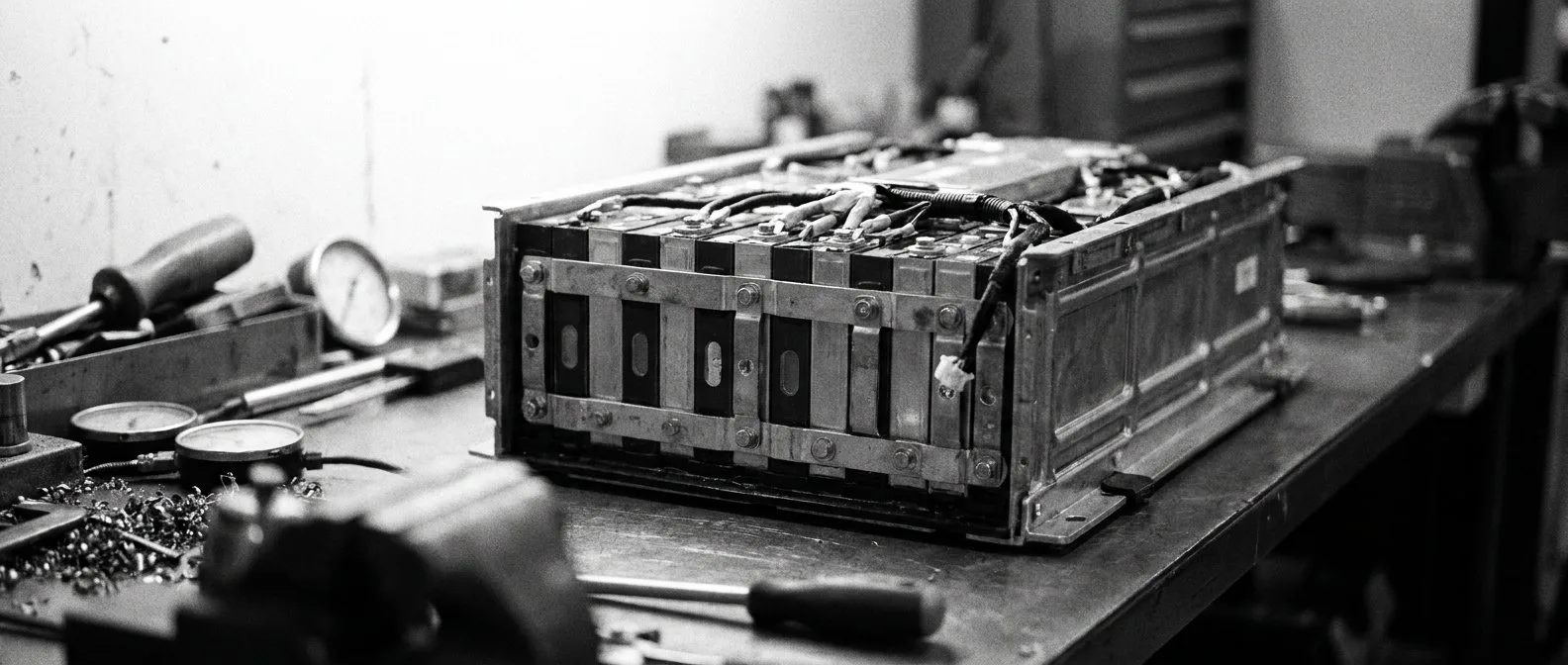
The single most important thing to establish on a used Model 3 is which battery chemistry it has. LFP and NMC cars age differently, charge differently and need different assessment methods — and the badge on the boot won't tell you.
Which one are you looking at?
Australian-delivered cars run from 2019. Chinese-built cars arrived from around 2021, bringing LFP packs to the base variant, and the facelift landed in 2024. Which one you're looking at changes both the checks and the value.
| Variant | Battery | What it changes |
|---|---|---|
| RWD / Standard Range (pre-2021) | NMC | Charge-to-90% habits matter. Expect the usual NMC degradation curve. |
| RWD (2021 onward) | LFP | Daily 100% charging is normal and fine. App-based SoH estimates are unreliable — needs a proper read. |
| Long Range AWD | NMC | Bigger pack, more heat to manage. Check the thermal history and cooling system carefully. |
| Performance | NMC | Brakes, tyres and suspension have usually worked harder. Check for track use. |
| Facelift (2024 onward) | LFP / NMC | Revised suspension and interior. Fewer known issues, but fewer cars out of warranty too. |
What goes wrong on a Model 3
None of these are deal-breakers on their own. All of them are worth money in a negotiation, and all of them are invisible in a listing.
Front upper control arms and suspension knocks
A well-known wear point, especially on cars that have lived with Queensland speed humps and unsealed driveways. Listen for a knock over low-speed bumps and check for previous replacement in the service history — it is not an expensive fix, but it is a fix.
Screen and computer faults on early cars
Early media units can degrade over time, and a failed screen takes the climate control, reversing camera and charging interface with it. We check for stored faults and confirm the unit behaves through a full cycle rather than just booting.
Water where it should not be
Tail light and boot seal ingress on earlier cars, and condensation in the light housings. In this climate the concern is not the lamp itself — it is what sustained moisture does to connectors and the boot floor over years.
Paint, panel gaps and previous repair
Build quality varied significantly between plants and model years. We measure paint depth across the car: uneven readings mean a repair nobody mentioned, and the location of that repair matters more on an EV than it would on a petrol car.
Ex-rideshare and ex-hire cars
Extremely common in this market and rarely disclosed. Very high cycle counts, near-exclusive DC fast charging, worn seats and a battery that has aged well beyond its odometer. The charging history in the BMS tells the truth even when the ad does not.
The battery on this one
Model 3 packs are generally durable, and a healthy example holds up well against the degradation curve for its age. The problem is that the two chemistries need different assessment. An NMC car follows the usual pattern — a few per cent early, then a slow decline. An LFP car degrades slowly but has a famously flat voltage curve, which defeats consumer apps and lets a seller quote a number that means nothing.
We read usable capacity, cell voltage spread and the charge history straight from the battery management system, then confirm it under load on a road test. See how the test works, or check the expected figure for the car's age against what's normal. Tesla-specific detail is on the Tesla battery health check page.
Buying one in Brisbane, Sydney or Melbourne
There are more used Model 3s for sale here than any other EV, which is good news — you can afford to walk away. Cars sold privately in the bayside and inner-north suburbs are often single-owner home-charged examples; the ones moving quickly through wholesale channels are much more likely to have a commercial history behind them. Ask what the car did for a living, then let the data confirm it.
We inspect on site across Brisbane, Sydney, Melbourne, the Gold Coast, Ipswich, Logan and the Redlands — at a private seller's home, a dealer forecourt or a workplace car park. Report in writing inside 24 hours, then a call to walk you through it.
Questions we get about the Model 3
How do I tell if a Model 3 has an LFP or NMC battery?
The charging screen guidance is a hint — LFP cars are told to charge to 100% regularly, NMC cars to around 80% — but the reliable answer comes from the VIN and a diagnostic read. It matters, because the two chemistries age differently and are valued differently.
Is a high-kilometre Model 3 still worth buying?
Often yes. Kilometres alone are a poor predictor on these cars; how the battery was charged and how hard the car worked matter far more. A 180,000 km home-charged car can test better than a 90,000 km ex-rideshare one.
Can you inspect a Model 3 at a dealership?
Yes, and we do it regularly across Brisbane, Sydney and Melbourne. Most dealers are fine with an independent inspection on site. If one refuses, that is useful information in itself.
Does a used Model 3 still have battery warranty?
Most carry around eight years of high voltage battery cover with a distance limit and a capacity floor. Ex-rideshare cars often exceed the distance limit well before the eight years are up, so check both.
Know which Model 3 you're actually buying.
Battery chemistry, real state of health and the history the ad left out — measured on site.