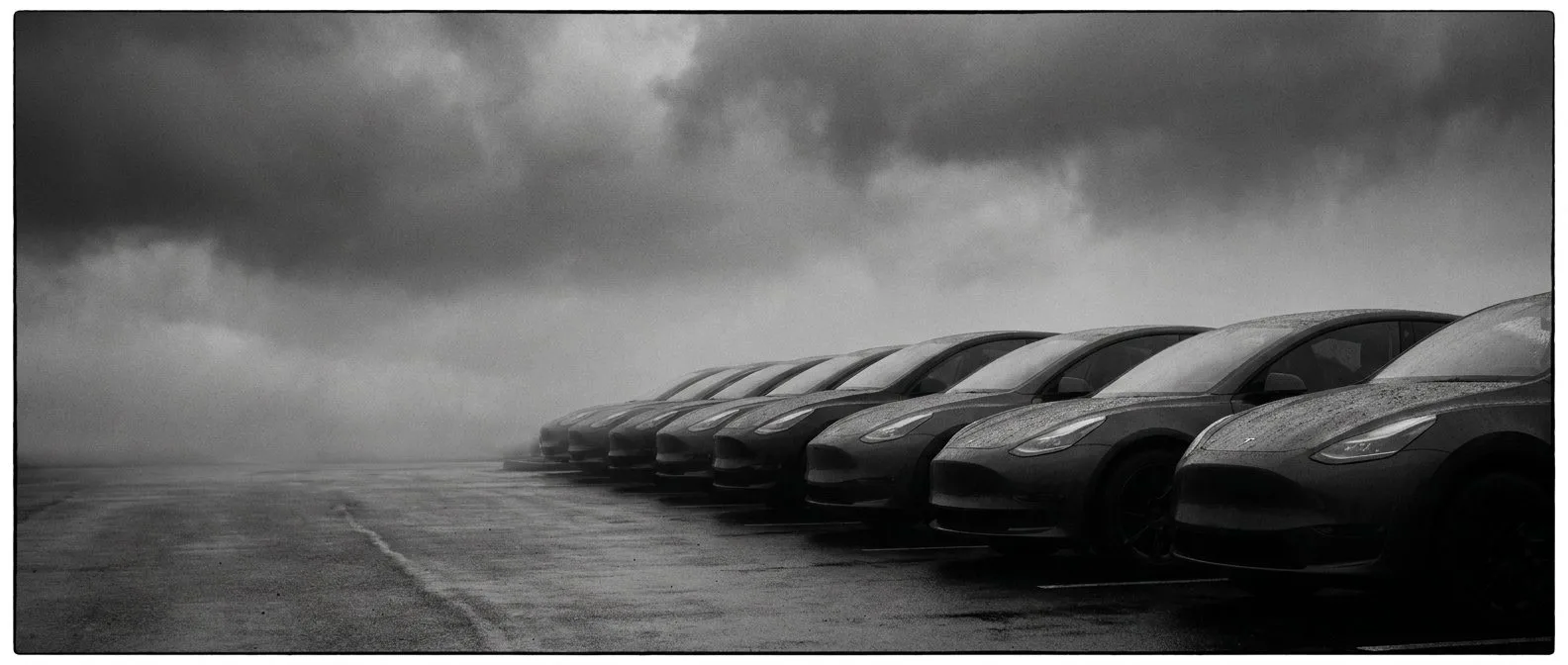
Two specific things decide this comparison on a used car, and neither appears in a road test: what ICCU work has been done on the Ioniq 5's VIN, and when the Model Y was delivered. Get those two answers and the rest is ordinary car buying.
The ICCU question
The Ioniq 5 sits on Hyundai's E-GMP platform — an 800-volt architecture shared with the Kia EV6. Its Integrated Charging Control Unit handles charging and keeps the 12-volt battery topped up, and it has been the subject of repeated service action.
In Australia, Ioniq 5 and Ioniq 6 vehicles were recalled during 2024 under campaigns REC-005942 and REC-006224. The defect was described as a software issue in the ICCU under which the auxiliary 12-volt battery may not charge as intended, resulting in battery drainage and loss of motive power. Remedies have included software updates and, in some cases, replacement of the ICCU and its fuse. There have been owner reports internationally of repeat failures after remedy.
None of that makes an Ioniq 5 a bad buy — it's a genuinely well-engineered car and campaign work is free. It does mean one question is non-negotiable: what has been done to this VIN, and was the unit inspected or replaced, or only reflashed? Get it in writing from Hyundai, not from the seller. The Model Y has no directly comparable campaign.
Warranty, side by side
| Tesla Model Y | Hyundai Ioniq 5 | |
|---|---|---|
| Vehicle warranty | 5 years, unlimited km — vehicles delivered from 1 Jan 2026 only. Earlier cars: 4 years / 80,000 km | 5 years, unlimited km from first registration |
| Extension | None | Up to 7 years total if first registered from 1 Jun 2025 and every service done on time at a Hyundai dealer |
| HV battery | 8 years / 160,000 km (RWD); 8 years / 192,000 km (Long Range, Performance); 70% floor | 8 years / 160,000 km from first registration |
| 12-volt battery | Covered under vehicle warranty terms | 2 years / 40,000 km |
| Commercial or rideshare use | Vehicle warranty capped at 5 years / 150,000 km | Passenger vehicles used commercially: 5 years / 130,000 km, and no 7-year extension |
Three things worth pulling out. First, Hyundai's warranty balance transfers to you as the new owner — so a 2023 Ioniq 5 still has cover running, while a 2023 Model Y was delivered under Tesla's old four-year, 80,000 km terms and has probably run out. Second, that Hyundai seven-year extension is conditional on dealer servicing: if a previous owner went elsewhere, the car drops back to five years and you inherit that.
Third, and quietly important: the Ioniq 5's 12-volt battery has its own short cover. Given the ICCU history, ask when it was last replaced. Background on all of this on the warranty page.
800 volts versus 400
The Ioniq 5's 800-volt architecture is the reason it charges as quickly as it does, and it's also why its charging control system is more complex than the Model Y's 400-volt setup. For an inspection that changes the protocol — different isolation testing, a different charging system to interrogate, different safety procedure.
It also changes the ownership history you should expect. Cars that charge quickly get fast-charged more, so the Ioniq 5 population skews toward heavier DC use than its odometers suggest. That isn't automatically damage — but it's a different ageing pattern, and it's why we look at charge-cycle mix rather than kilometres. See what degradation is normal.
Where each car's used population comes from
Model Y — volume and variety
Australia's best-selling EV, so the used pool is large and you can afford to be picky. It also means plenty of ex-fleet and ex-hire cars, and a facelift partway through that makes build date matter more than plate year.
Ioniq 5 — the lease returns
A large share went out on novated leases and is coming back now, usually with complete dealer history — which is exactly what makes the campaign record easy to verify. The question is how it was stored and charged, and a battery read answers that.
What we check differently on each
On the Ioniq 5 — campaign record and 12-volt under load
VIN checked against outstanding campaigns, evidence of ICCU work confirmed in writing where it exists, and the 12-volt tested under load rather than at rest — because that's where the symptoms start.
On the Model Y — build date, repair history and the boot seal
Which side of the facelift the car sits on, a paint-depth survey for undisclosed structural repair, and the tailgate sealing area where water ingress has been a recurring complaint.
On both — tyres, bushes and the weight tax
Two heavy, torquey SUVs on expensive rubber. Inner-edge wear, tired bushes and mismatched replacement tyres across an axle are common at three years and all worth money off.
On both — measured state of health and a live charge
Usable capacity and cell spread off the battery management system, then AC and, where a charger is available, DC charging tested in front of us.
So which one?
If the Ioniq 5 in front of you has documented ICCU work and a full dealer history, it's the stronger used proposition of the two right now — better remaining warranty, transferable, and the platform's known weakness already addressed on that specific car. If it doesn't, the risk isn't priced into most asking prices and you should treat it accordingly.
The Model Y is the safer default — more of them, better known, easier to sell on — but go in expecting the vehicle warranty to be finished on anything registered before 2026, and price the car as an out-of-warranty purchase. Full detail on the Model Y page and the Ioniq 5 page.
Sources and how we checked
Everything above was taken from manufacturers' published Australian terms, Australian recall records and contemporaneous motoring press coverage, checked on 2 August 2026. Prices and range figures are deliberately omitted — they change constantly and a stale figure is worse than none.
- Hyundai Australia published warranty: standard 5 years / unlimited kilometres from first registration for private use, balance transferable; extension to a maximum of 7 years for vehicles first registered from 1 June 2025 conditional on all scheduled servicing at an authorised Hyundai dealer; high-voltage battery 8 years / 160,000 km, whichever occurs first, excluded from the vehicle warranty term; 12-volt battery 2 years / 40,000 km; passenger vehicles used in a commercial application 5 years / 130,000 km.
- Tesla Australia: vehicle warranty of 5 years / unlimited kilometres for vehicles delivered from 1 January 2026, replacing 4 years / 80,000 km; capped at 5 years / 150,000 km for business use. Battery and drive unit 8 years / 160,000 km (RWD) or 8 years / 192,000 km (Long Range, Performance), with minimum 70% capacity retention.
- Australian ICCU recalls REC-005942 and REC-006224, issued during 2024 against Hyundai Ioniq 5 and Ioniq 6, defect described as a software issue in the Integrated Charging Control Unit under which the auxiliary 12-volt battery may not charge as intended, resulting in battery drainage and loss of motive power.
- Ioniq 5 platform: Hyundai E-GMP, 800-volt architecture, shared with the Kia EV6.
Terms differ by variant, build date and how the car has been used, and campaigns are added over time. Always confirm the position for the exact VIN with the manufacturer in writing before you pay — it's part of every inspection we do, and it goes in the report.
We'll check the VIN before you check the paint.
Campaign history, measured battery health and a written verdict, anywhere in Brisbane, Sydney and Melbourne.